

Food-Grade Antibacterial Ceramic Bowl: Reduces Biofilm, Safe for Sensitive Stomachs
Release time: 2026-10-10
Pet owners routinely invest significant time and money into selecting the right nutrition—scrutinizing ingredient panels, choosing limited-ingredient formulas, and consulting veterinarians for pets with sensitive stomachs. Yet one critical variable in digestive health is frequently overlooked: the surface from which a pet eats every single day. Even the cleanest, highest-quality diet can become a vector for gastrointestinal irritation if served in a bowl harboring microscopic bacterial colonies.
Upgrading to a food-grade antibacterial ceramic food bowl pet feeder addresses feeding hygiene at its source. By combining non-porous vitrified ceramic with integrated antimicrobial glaze technology, these bowls actively inhibit biofilm formation, reduce exposure to opportunistic pathogens, and create a safer, cleaner dining environment for cats and dogs prone to digestive or dermatological sensitivities.
The Hidden Hygiene Risk: Understanding Biofilm in Pet Bowls
If you have ever rinsed a pet’s food or water dish and noticed a faint, slippery film clinging to the interior surface, you have encountered biofilm. Biofilm is not merely leftover food grease; it is a structured, self-protecting community of microorganisms—including Escherichia coli, Salmonella, Staphylococcus, and Listeria—encased in a sticky extracellular polymeric substance (EPS).
Every time a pet eats, saliva, oral bacteria, food proteins, and moisture mix along the walls of the bowl. Within hours, free-floating bacteria adhere to microscopic imperfections on the bowl’s surface. Once anchored, they multiply rapidly and secrete a protective matrix that shields them from casual rinsing and even mild dishwashing detergents.
According to microbiological surveys of household surfaces, pet food bowls consistently rank among the top five most bacteria-dense items in the home—often carrying higher microbial loads than kitchen sinks or bathroom faucets. For healthy adult pets, a robust immune system may tolerate low-level daily exposure. However, for kittens, senior animals, or pets with sensitive stomachs, chronic ingestion of biofilm-associated bacteria can trigger recurring symptoms:
- Intermittent vomiting or regurgitation shortly after meals.
- Soft stools, mild diarrhea, or excessive flatulence caused by low-grade intestinal inflammation.
- Decreased appetite or food aversion, as pets with keen olfactory senses detect rancid lipids and bacterial byproducts trapped in porous dishes.
- Feline chin acne and contact dermatitis, resulting from bacterial transfer onto the hair follicles around the chin and lips during feeding.
Why Conventional Pet Bowl Materials Fall Short
Not all pet bowls behave the same way at a microscopic level. Understanding how standard materials age under daily use clarifies why biofilm persists even in households with diligent cleaning habits.
Plastic Bowls
Plastic is lightweight and inexpensive, but it is fundamentally ill-suited for long-term feeding hygiene. Pet teeth, kibble edges, and abrasive scrubbing sponges quickly carve microscopic scratches into soft polymer surfaces. These micro-grooves act as permanent shelters for biofilm, making thorough sanitization nearly impossible. Furthermore, lower-grade plastics can leach bisphenol A (BPA) or phthalates over time and absorb fatty acids from pet food, leading to persistent odors and allergic skin reactions.
Stainless Steel Bowls
Stainless steel is a notable improvement over plastic and is widely recommended in veterinary clinics for its durability. However, not all stainless steel is created equal. Lower-grade alloys (such as 201-series steel rather than food-grade 304 steel) can corrode when exposed to acidic wet foods or dishwashing salts, creating pitted areas where bacteria accumulate. Additionally, some pets experience contact sensitivities to trace nickel content, while cats may be deterred by metallic reflections, static shocks, or the loud clatter of kibble against thin metal.
Standard Uncoated or Low-Fired Ceramics
Ordinary decorative ceramics often suffer from micro-crazing—tiny hairline cracks in the glaze caused by thermal expansion or low-temperature firing. Once the glaze crazes, moisture and bacteria penetrate the porous clay body underneath. Worse, decorative ceramics not certified as food-grade may contain lead or cadmium in their pigments, posing a cumulative toxicity risk.
The Material Science Behind Food-Grade Antibacterial Ceramic
A purpose-engineered antibacterial pet feeder built with food-grade ceramic solves the structural weaknesses of traditional materials through two converging technologies: high-temperature vitrification and inorganic antimicrobial glazing.
1. High-Temperature Vitrification
Food-grade stoneware or porcelain is fired in industrial kilns at temperatures exceeding 1,200∘C (2,192∘F). This process vitrifies the clay and fuses the glaze into a glass-like, impermeable barrier with a water absorption rate near zero. Because the resulting surface is extraordinarily hard and smooth, kibble and claws cannot easily scratch it, denying biofilm the microscopic anchor points it needs to establish colonies.
2. Integrated Inorganic Antimicrobial Agents
Unlike temporary chemical sprays that wash away after a few cycles, true antibacterial ceramic integrates inorganic antimicrobial agents—most commonly silver ions () or zinc oxide () compounds—directly into the glaze matrix prior to firing.
When moisture from wet food or saliva contacts the bowl, trace concentrations of these ions interact with bacterial cell membranes. They disrupt cellular respiration and inhibit DNA replication, preventing bacteria from multiplying into a mature biofilm. Because the antimicrobial mechanism is mineral-based and locked inside the vitrified glaze, it remains active throughout the lifespan of the bowl without leaching harmful chemicals into the pet’s food.
3. Certified Food-Grade Safety
Reputable food-grade antibacterial ceramic bowls undergo rigorous independent testing to comply with international food-contact standards, including FDA (U.S. Food and Drug Administration) and LFGB (German Food and Feed Code) regulations. These certifications verify that the glaze is 100% free of lead, cadmium, and toxic heavy metals, and that ion migration stays well within safe physiological limits for daily ingestion.
Material Comparison: How Pet Bowl Surfaces Perform
To evaluate the practical differences across common feeding vessels, the table below compares food-grade antibacterial ceramic against standard alternatives across six hygiene and usability metrics.
| Evaluation Metric | Food-Grade Antibacterial Ceramic | 304 Stainless Steel | Standard Plastic | Decorative / Low-Fired Ceramic |
|---|---|---|---|---|
| Biofilm Resistance | Excellent (Smooth glaze + active antimicrobial inhibition) | Good (Non-porous, but no active inhibition) | Poor (Micro-scratches trap biofilm rapidly) | Fair to Poor (Prone to micro-crazing over time) |
| Scratch Resistance | High (Hard vitrified surface resists kibble & sponges) | Moderate (Can develop fine scratches with abrasive scrubbing) | Low (Easily gouged by teeth, claws, and washing) | Moderate (Soft glazes wear down faster) |
| Sensitive Stomach Safety | Optimal (Chemically inert, odorless, reduces pathogen load) | High (Inert if true 304 grade; rare nickel sensitivity) | Low (Retains rancid oils; potential chemical leaching) | Variable (Risk of lead/cadmium if uncertified) |
| Feline Chin Acne Prevention | Excellent (Minimizes bacterial transfer to chin follicles) | Good (Requires strict daily washing) | Poor (Primary environmental trigger for chin acne) | Fair (Dependent on glaze integrity) |
| Thermal & Dishwasher Safety | High (Dishwasher and microwave safe) | Moderate (Dishwasher safe; not microwave safe) | Low (Warps under high-heat sanitizing cycles) | Variable (Thermal shock can crack low-fired glaze) |
| Stability & Noise Control | Excellent (Heavyweight, quiet, resists sliding) | Low to Moderate (Lightweight; noisy unless rubber-ringed) | Low (Slides easily across floors) | Good (Heavyweight, though more brittle) |
As the comparison demonstrates, food-grade antibacterial ceramic uniquely combines the inert safety of glass-like vitrified surfaces with proactive microbial suppression—making it especially advantageous for households managing chronic digestive sensitivities or multi-pet feeding stations.
Why Sensitive Stomachs Benefit Directly from Cleaner Feeding Surfaces
Pets with sensitive stomachs often operate with a narrow margin of gastrointestinal stability. Conditions such as Inflammatory Bowel Disease (IBD), chronic gastritis, food intolerances, or post-antibiotic dysbiosis leave the intestinal mucosal barrier vulnerable to minor environmental insults.
When a pet with a compromised gut eats from a bowl coated in microscopic biofilm, two secondary issues arise:
- Subclinical Pathogen Load: Even when bacterial counts are too low to cause acute food poisoning, daily ingestion of endotoxins and opportunistic bacteria forces the gut-associated lymphoid tissue (GALT) to remain in a state of low-grade immune activation. Over weeks, this manifests as erratic stool quality, gurgling abdominal sounds (borborygmi), and sporadic nausea.
- Lipid Oxidation and Palatability Loss: High-fat kibble coatings and wet food gravies oxidize rapidly when trapped in porous bowls. Oxidized fats not only irritate the gastric lining but also alter the aroma of fresh food, causing picky or sensitive cats to refuse meals—a dangerous pattern that can lead to hepatic lipidosis if prolonged.
Switching to an antibacterial pet feeder eliminates these confounding environmental variables. Veterinarians and pet nutritionists frequently recommend standardizing bowl hygiene before initiating an elimination diet trial, ensuring that any observed digestive improvements or setbacks reflect the food itself rather than bowl-borne contamination.
Ergonomics, Whisker Fatigue, and Modern Feeder Integration
Material hygiene is only half of the equation; bowl geometry and system compatibility play an equally important role in comfortable digestion.
Preventing Whisker Fatigue and Aerophagia
Cats possess highly innervated sensory hairs (vibrissae) on their muzzles. Deep, narrow bowls force a cat’s whiskers to brush repeatedly against the vertical walls during every bite—a phenomenon known as whisker fatigue or whisker stress. Cats experiencing whisker discomfort often scoop kibble onto the floor or eat anxiously in rapid bursts, swallowing excess air (aerophagia) that leads to post-meal regurgitation.
A well-designed wide, shallow ceramic bowl allows pets to access every morsel cleanly without facial contact against the rim. Furthermore, the natural weight of solid ceramic prevents the dish from skidding across tile or hardwood floors, promoting a calm, steady eating posture.
Upgrading Automated Feeding Systems
For busy households, timed feeding is essential for pets with sensitive stomachs that require small, frequent portions to prevent bile vomiting (bilious vomiting syndrome). However, many automatic feeders ship with default plastic trays that undermine feeding hygiene.
Modern modular designs now allow owners to pair smart dispensing bases with a removable antibacterial ceramic food bowl pet feeder tray. This combination delivers precise portion control alongside clinical-grade surface cleanliness. When evaluating the best pet feeder for cats, look for models that pair an airtight kibble hopper with a detachable, dishwasher-safe antibacterial ceramic dish—bridging convenience with uncompromised digestive safety.
Maintenance Protocol: Maximizing Hygiene and Bowl Longevity
While an antibacterial glaze dramatically slows microbial colonization between meals, it is designed as a protective barrier rather than a substitute for regular washing. Food proteins and fats will still settle on the surface and must be removed mechanically so the antimicrobial glaze remains exposed and effective.
Recommended Cleaning Schedule by Diet Type
Different diets leave distinct residues and support bacterial growth at varying rates. Use the protocol below to maintain optimal hygiene:
| Diet Type | Washing Frequency | Recommended Cleaning Method | Key Hygiene Note |
|---|---|---|---|
| Dry Kibble | Once daily | Hot water (>60∘C) + unscented mild dish soap, or top-rack dishwasher cycle | Kibble contains sprayed surface fats that oxidize within 24 hours; do not simply top off old kibble. |
| Wet / Canned Food | After every meal | Immediate rinse, followed by hot soapy wash or sanitizing dishwasher cycle | High moisture accelerates bacterial replication; discard uneaten wet food after 2 hours at room temperature. |
| Raw / Freeze-Dried Rehydrated | After every meal | Dedicated pet sponge + hot soapy wash, followed by high-heat dishwasher sanitize cycle | Keep raw-feeding bowls separate from human cookware to prevent cross-contamination. |
| Water Bowls | Daily rinse; deep wash every 2 days | Hot soapy wash; wipe interior walls thoroughly to disrupt early biofilm attachment | Standing water develops biofilm fastest in warm rooms; refill with fresh filtered water daily. |
Practical Care Best Practices
- Avoid harsh abrasives: Skip steel wool or industrial scouring pads. A soft cellulose sponge or silicone brush easily lifts residue from a vitrified glaze without dulling its finish.
- Use fragrance-free detergents: Strong floral or citrus dish soaps can leave subtle scents that deter sensitive cats from eating. Rinse thoroughly with hot water.
- Inspect regularly for chips: Ceramic is durable under normal use, but dropping a bowl onto stone or tile can chip the glaze. If the underlying porous clay is exposed, replace the bowl promptly to maintain a fully sealed feeding surface.
How to Choose the Right Antibacterial Ceramic Bowl
With a growing number of pet accessories marketed as “hygienic” or “vet-approved,” verifying product specifications ensures you receive genuine material benefits. Prioritize the following criteria before purchasing:
- Verified Food-Grade Certifications: Confirm explicit compliance with FDA, LFGB, or equivalent third-party food-contact safety standards, guaranteeing zero lead or cadmium.
- Kiln-Fired Glaze Integration: Ensure the antibacterial property is baked into the ceramic glaze rather than applied as a temporary post-production coating.
- Ergonomic Elevation and Width: For cats and small dogs, choose a bowl at least 5.5 to 6.5 inches wide with low, gently sloped sides. Pairing the bowl with a slight elevation (10∘ to 15∘ tilt or a raised stand) reduces neck strain and supports smooth esophageal transit.
- Microwave and Dishwasher Compatibility: True vitrified stoneware handles high-temperature dishwashing for reliable thermal sanitization and allows gentle warming of refrigerated wet food to enhance aroma for picky eaters.
- Compatibility with Feeding Routines: Whether you prefer a standalone elevated dish or are searching for the best pet feeder for cats with timed dispensing capabilities, verify that replacement ceramic bowls are easy to detach and clean daily.
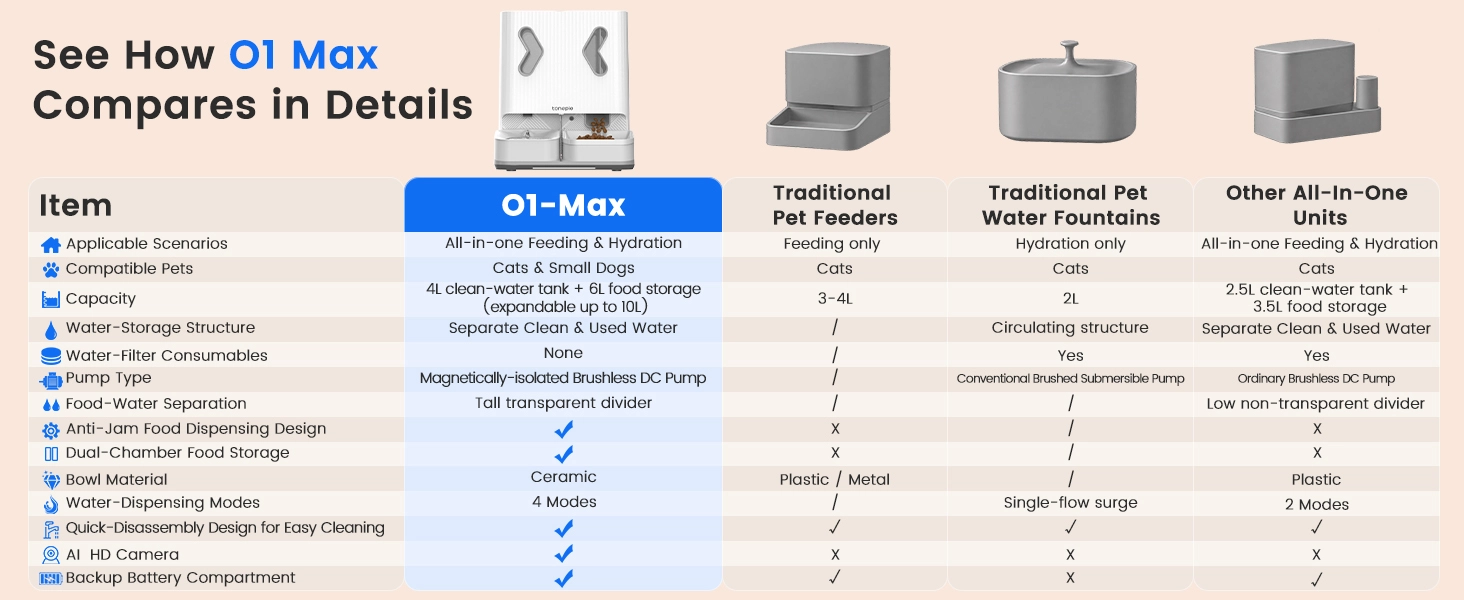
Tonepie O1/O1 Max Smart 2-in-1 Pet Feeder & Water Dispenser
FAQ
1. Does the antibacterial property of a ceramic bowl wear off after repeated dishwasher cycles?
No, provided the bowl is made with a kiln-fired inorganic antimicrobial glaze rather than a surface spray. Because mineral-based antimicrobial agents (such as silver or zinc ions) are fused directly into the vitrified glaze at temperatures above 1,200∘C, they become a permanent structural part of the surface. Routine dishwashing will not wash away the antibacterial function, as long as the glaze remains intact and unchipped.
2. Can switching to a food-grade antibacterial ceramic bowl actually help with feline chin acne and mild stomach upset?
Yes, in many cases it provides noticeable relief as part of a comprehensive hygiene routine. Feline chin acne is frequently aggravated by bacteria and oxidized oils transferring from scratched plastic bowls onto the chin’s sebaceous glands. Similarly, pets with sensitive stomachs experience fewer bouts of mild, unexplained GI irritation when daily exposure to bowl-borne biofilm is eliminated. However, persistent vomiting, diarrhea, or severe skin lesions should always be evaluated by a veterinarian to rule out underlying medical conditions.
3. If the bowl is antibacterial, do I still need to wash it every day?
Yes. An antibacterial glaze actively inhibits bacteria from multiplying and forming stubborn biofilm between washes, but it does not dissolve physical food debris, saliva, or grease. If a thick layer of leftover food coats the glaze, bacteria can grow on top of the food residue itself. Washing the bowl daily with hot water and mild, unscented soap keeps the ceramic surface clean so the antibacterial glaze can function continuously at peak effectiveness.
Conclusion
Protecting a pet with a sensitive stomach extends beyond what goes into the bowl—it starts with the bowl itself. By replacing porous, scratch-prone feeding dishes with a food-grade antibacterial ceramic bowl, pet owners disrupt the cycle of biofilm formation, reduce unnecessary exposure to gastrointestinal irritants, and support healthier skin and digestion at every meal. Paired with ergonomic geometry and consistent daily washing, antibacterial ceramic represents a straightforward, durable, and science-backed upgrade to modern pet care.