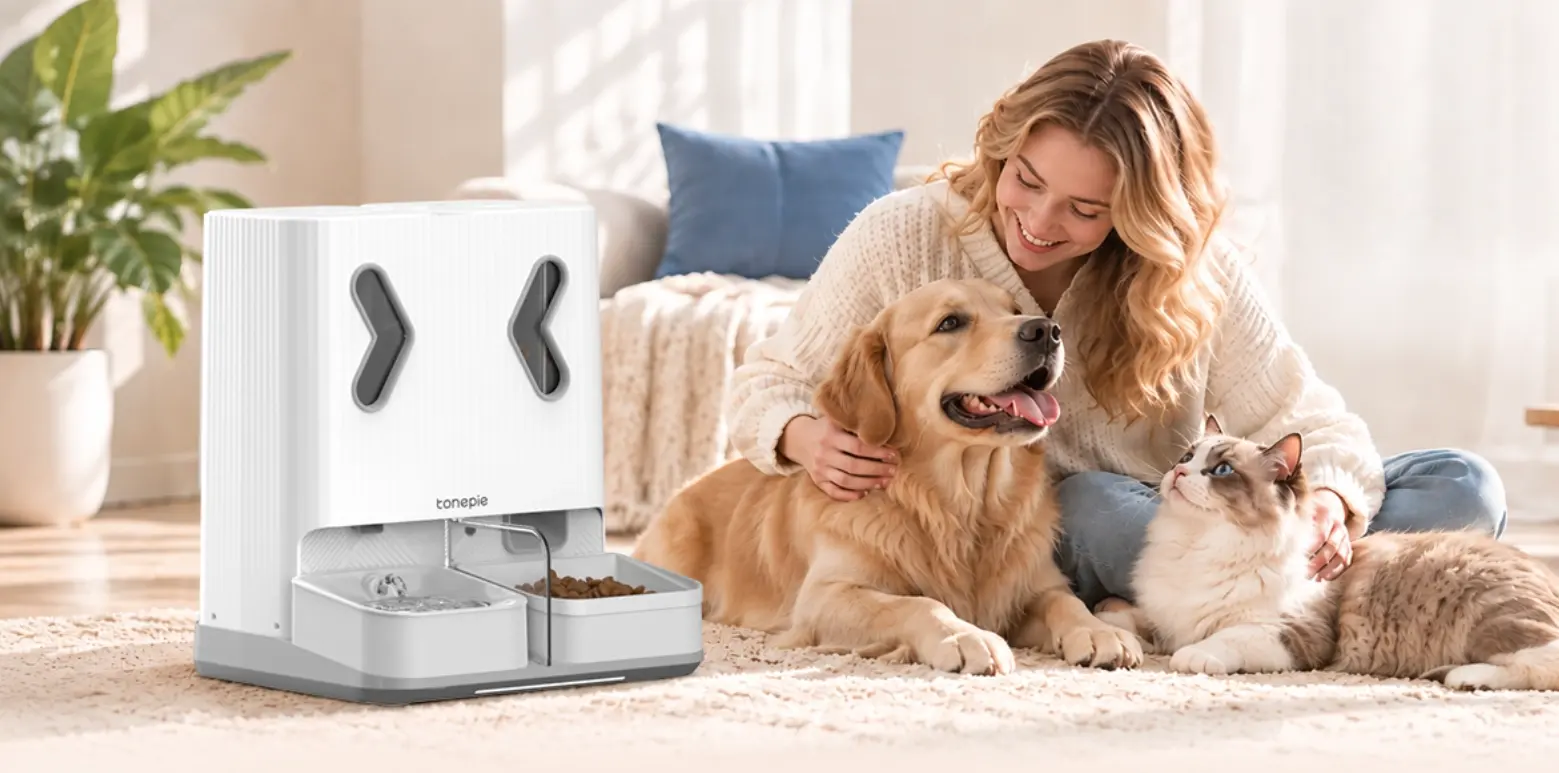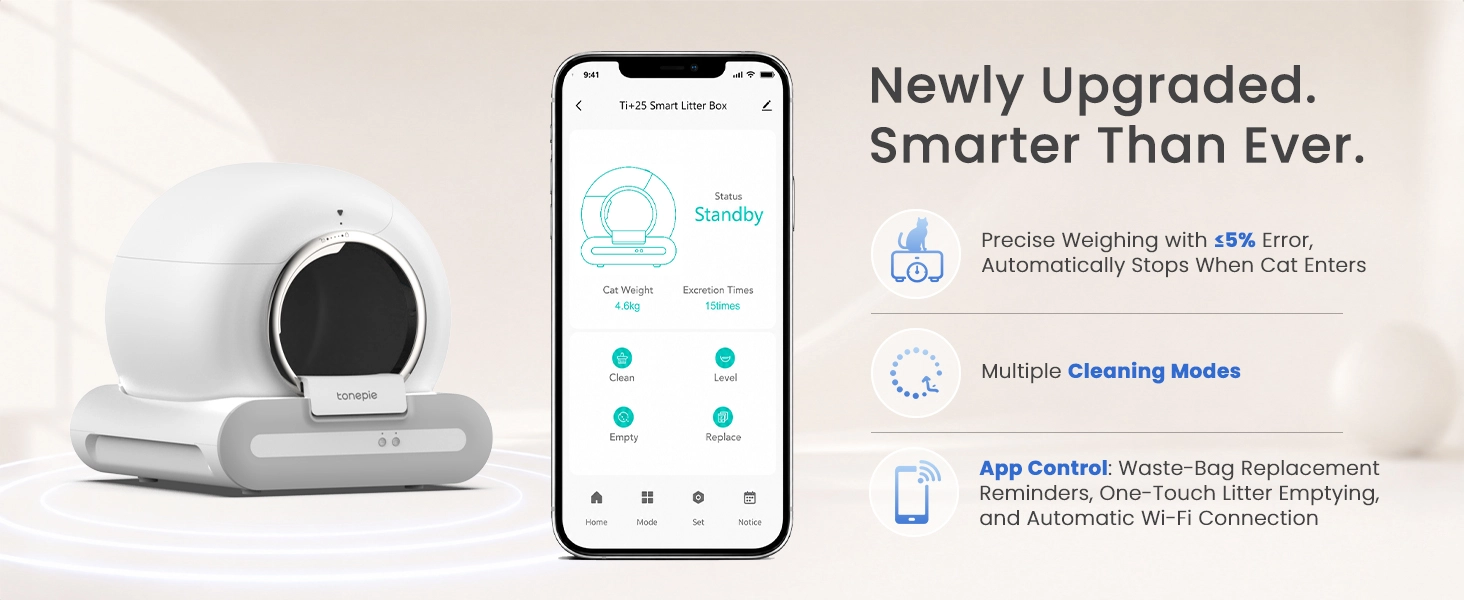


Reinforced Base and Locking Power Port: Tip-Proof Design for Active Cats
Release time: 2026-10-23
Table of Contents
Every cat owner recognizes the sound of midnight “zoomies.” One moment the house is silent; the next, a ten-pound feline launches out of the litter box at full speed, kicking up a cloud of clay granules and sending a lightweight plastic tray sliding across the hardwood floor. For owners of high-energy breeds, large cats, or multi-cat households, standard litter boxes rarely withstand daily athletic abuse. When you upgrade to an automated unit, a second vulnerability often emerges: an exposed, easily dislodged power cable that brings the entire cleaning cycle to a halt.
Solving these two everyday frustrations requires more than thicker plastic. It demands deliberate mechanical and electrical engineering. By combining a weighted, structurally braced foundation with a secured power interface, a modern anti tipping cat litter box eliminates both physical spills and unexpected downtime. Below, we examine why conventional designs fail under pressure, how reinforced bases and locking power ports work together, and what active-cat households should look for when upgrading their pet care setup.
The Physics of Feline Chaos: Why Standard Litter Boxes Fail
Cats do not enter and exit their litter boxes gently. Driven by instinctual behaviors—vigorous digging, aggressive covering, and sudden post-elimination sprints—active cats exert surprising amounts of lateral and rotational force on their bathroom enclosures.
When a muscular cat leans its full body weight against the rim of a standard litter pan, or leaps onto the top hood of an automatic unit to survey the room, it creates torque. If the litter box has a narrow footprint or a high center of gravity, that torque easily overcomes the downward pull of gravity. The result is a tipped unit, scattered litter, spilled waste drawers, and a startled cat that may develop litter box aversion.
Standard automated litter boxes are particularly susceptible to instability for three reasons:
- Top-Heavy Geometry: Rotating drums and elevated motors raise the center of mass, making the unit prone to rocking when a cat jumps on or off the upper shell.
- Low-Friction Footing: Smooth molded plastic bottoms offer minimal grip on tile, vinyl, or hardwood floors, allowing the unit to shift several inches with every energetic exit.
- Hollow Chassis Construction: Lightweight shells flex under heavy loads, distorting weight sensors and causing uneven contact with the floor.
Over time, constant shifting does more than create a mess. It stresses internal gears, misaligns optical safety sensors, and tugs repeatedly at the power cord.
Engineering Stability: The Anatomy of a Reinforced Base
A truly tip-proof litter box starts from the ground up. Rather than relying solely on the weight of the litter inside to hold the unit down, a reinforced base uses deliberate geometry, material density, and surface friction to anchor the machine firmly in place.
1. Lowered Center of Gravity
By concentrating heavier mechanical components—such as the drive motor, gear assembly, and structural ballast—inside the lowest section of the chassis, engineers drop the center of gravity closer to the floor. Even when the globe is empty during a litter change, the base resists tilting.
2. Expanded Anti-Tip Footprint
A wider, flared base increases the lever arm required to tip the unit. When a cat perches on the entry ledge or leaps off the side, its weight stays well within the stable support polygon of the chassis. This prevents the dreaded “seesaw” effect common in narrow, high-walled boxes.
3. Internal Structural Ribbing
Beneath the exterior shell, high-grade engineering polymers (such as reinforced ABS) are molded with honeycomb or cross-ribbed internal supports. This architecture distributes vertical and lateral loads evenly across the entire base without adding unnecessary bulk. It also prevents the frame from warping under the weight of large breeds like Maine Coons or Ragdolls.
4. High-Friction Anti-Slip Pads
Wide silicone or vulcanized rubber feet anchor the chassis to smooth flooring. Beyond preventing sliding, these dampeners absorb the micro-vibrations generated during self-cleaning cycles, reducing operational noise and protecting delicate hardwood finishes from scratches.
When these four structural elements operate together, the unit remains stationary even during the most chaotic multi-cat chases. That rock-solid foundation is the first prerequisite for maintaining a mess free cat litter box environment.
The Unsung Vulnerability: Power Cord Disconnections in Smart Litter Boxes
Mechanical stability addresses only half of the equation. In automated litter care, uninterrupted electrical power is equally critical. Most consumer smart litter boxes rely on standard cylindrical DC barrel plugs that simply push into an exposed port at the rear of the machine.
In a home with active pets, a friction-fit plug is a weak link waiting to fail. Cats are naturally drawn to dangling cords. A curious kitten batting at a wire, a cat squeezing behind the machine during play, or even a vacuum cleaner brushing against the cable can easily pull a standard plug loose.
The consequences of an accidental disconnection go beyond minor inconvenience:
- Mid-Cycle Interruptions: If power drops while the drum is rotating, the unit can freeze with the waste chute open or the entry partially blocked, leaving your cat without access to its bathroom.
- Odor Accumulation: Uncleaned waste sits exposed for hours—especially problematic if the disconnection happens shortly after you leave for work or a weekend trip.
- Sensor Recalibration Errors: Sudden power loss can interrupt weight-tracking logs and force manual resets upon reconnection.
How a Locking Power Port Solves the Problem
An anti disconnection power cord litter box replaces fragile push-in plugs with an engineered retention system designed to withstand tugging, shifting, and accidental snags. Key design features include:
- Twist-Lock or Clip-In Connectors: Similar to industrial or aviation-grade interfaces, the power jack inserts and locks mechanically into place via a quarter-turn collar or dual spring-loaded latches. A casual tug will not disengage the electrical contacts.
- Recessed Port Channels: Instead of protruding straight out from the back wall—where it can be bent or snapped against baseboards—the power port sits recessed beneath the reinforced base. Integrated cable routing channels guide the cord flat along the floor toward the nearest wall outlet.
- Molded Strain Relief: Flexible rubberized collars at the plug junction absorb bending stress, preventing internal copper wires from fraying over years of use.
- Chew-Resistant Braided Sleeving: Pairing a locking port with a tightly woven nylon-braided cord adds an extra layer of protection against curious teeth and claws, while low-voltage DC operation keeps the circuit safe for pets.
Together, the recessed channel and mechanical lock ensure that even if a cat sprints behind the unit and hooks a paw around the cable, the power remains steady and the cleaning schedule stays intact.
Feature Comparison: Standard vs. Reinforced & Locking Design
To understand the practical difference these engineering upgrades make in daily life, it helps to compare three common tiers of litter box setups side by side.
| Feature / Performance Metric | Standard Manual Litter Pan | Basic Automatic Litter Box | Reinforced Base + Locking Port Unit |
|---|---|---|---|
| Tip Resistance | Low; easily flipped when cats perch on the rim | Moderate; top-heavy drum can rock on uneven pressure | High; low center of gravity with wide, braced footprint |
| Floor Grip & Stability | Poor; slides across tile and hardwood | Fair; small plastic feet allow gradual shifting | Excellent; wide silicone pads lock firmly onto hard floors |
| Power Connection Security | N/A (Manual) | Friction-fit DC barrel plug; easily dislodged | Mechanical twist-lock or latch port with recessed routing |
| Mid-Cycle Disruption Risk | N/A | Moderate to High in active or multi-cat homes | Minimal; resists accidental tugs and playful interference |
| Large-Breed Suitability | Limited; requires oversized pans to prevent tipping | Variable; flexing frames can trigger sensor errors | High; ribbed chassis supports heavy cats without flexing |
| Long-Term Floor Protection | Low; grit trapped beneath sliding pans scratches floors | Moderate | High; stationary rubberized base eliminates abrasive sliding |
As the comparison illustrates, upgrading to an automated unit without addressing chassis stability and power retention simply trades manual scooping for a new set of maintenance headaches. True hands-off convenience depends on hardware that stays firmly planted and reliably powered.
Beyond Stability: How Structural Integrity Creates a Cleaner Home
Stability and electrical reliability directly impact household hygiene. When a litter box shifts, rocks, or loses power, cleanliness breaks down quickly.
First, a rigid, anchored base minimizes litter scatter. When a cat pushes off a sliding pan, Newton’s third law sends the pan backward while flinging litter outward across the room. A stationary base absorbs that launch force instead, keeping the cat’s momentum directed onto the litter mat rather than turning the box into a catapult.
Second, consistent power guarantees timely waste cycling. Odor control in smart litter boxes relies heavily on removing clumps within minutes of use, sealing them inside a carbon-filtered waste drawer before smells permeate the room. When power stays securely locked in, the cleaning cycle executes reliably every single time—supporting a genuinely mess free cat litter box routine without unpleasant surprises when you walk through the front door.
Finally, structural stability protects your cat’s psychological comfort. Felines are acutely sensitive to unstable footing. A box that wobbles, creaks, or shifts underfoot can cause anxiety, prompting a cat to eliminate on carpets or furniture instead. A solid, immobile base feels as dependable as the floor itself, encouraging consistent, stress-free use.
Real-World Scenarios: Who Needs This Upgrade Most?
While any pet parent appreciates dependable hardware, a reinforced base and locking power port deliver the highest return on investment in four specific households:
1. Multi-Cat Homes
When two, three, or four cats share a litter station, traffic multiplies—and so does playful ambush behavior. Cats frequently hide behind the unit to pounce on a housemate exiting the chamber. An anti tipping cat litter box absorbs those sudden side impacts without budging, ensuring high-traffic households never come home to an overturned machine.
2. Large and Muscular Breeds
Breeds such as Maine Coons, Norwegian Forest Cats, Bengals, and Savannahs routinely weigh between 15 and 25 pounds. Their sheer mass and leaping power quickly expose structural weaknesses in thin-walled boxes. A ribbed, wide-footprint base handles their weight effortlessly while maintaining accurate weight-sensor readings.
3. Energetic Kittens and “Zoomie” Enthusiasts
Young cats explore the world with their paws and teeth. They climb on top of enclosures, chase tails behind appliances, and bat at cords. An anti disconnection power cord litter box removes the risk of playful exploration turning into an unplanned power outage.
4. Frequent Travelers and Busy Professionals
If you work long shifts or take overnight trips, you rely on automated pet tech to function flawlessly without supervision. Knowing that the unit cannot be tipped over or accidentally unplugged provides genuine peace of mind when you are away from home.
Practical Guide: Setting Up Your Litter Station for Maximum Stability
Even the best-engineered litter box performs best when paired with smart placement and routine care. Follow these practical guidelines to maximize both mechanical stability and power security.
Choose the Right Surface
Always place your automated litter box on a flat, hard surface such as tile, hardwood, laminate, or low-pile vinyl. Thick carpets and plush rugs compress unevenly beneath the base, which can introduce wobble and interfere with built-in gravity or weight sensors. If your only available space is carpeted, place a rigid, flat polycarbonate or hardwood support board underneath the unit.
Route the Power Cord Intentionally
Take full advantage of the recessed underside channels. Route the cable directly out the back toward the wall, leaving minimal slack exposed on the floor. Avoid stretching the cord tightly across walkways where human feet or robotic vacuums could snag it.
Maintain Proper Wall Clearance
Leave at least two to three inches of clearance between the back of the machine and the wall. This prevents the unit from rubbing against baseboards during cleaning cycles and ensures the locking power port remains free from unnecessary lateral pressure.
Routine Stability & Power Maintenance Schedule
| Maintenance Task | Recommended Frequency | Purpose |
|---|---|---|
| Wipe Anti-Slip Base Pads | Every 2–4 weeks | Removes fine litter dust that can reduce rubber-to-floor friction |
| Inspect Locking Power Port | Monthly (during deep cleans) | Confirms the locking collar/latch is seated flush and free of debris |
| Check Cord Jacket & Routing | Monthly | Verifies braided sleeving shows no signs of wear, kinks, or chew marks |
| Verify Floor Levelness | After moving the unit | Ensures all four support zones make even contact for accurate sensors |
A few minutes of preventive inspection each month preserves the tight mechanical tolerances that keep your litter station operating quietly and reliably for years.
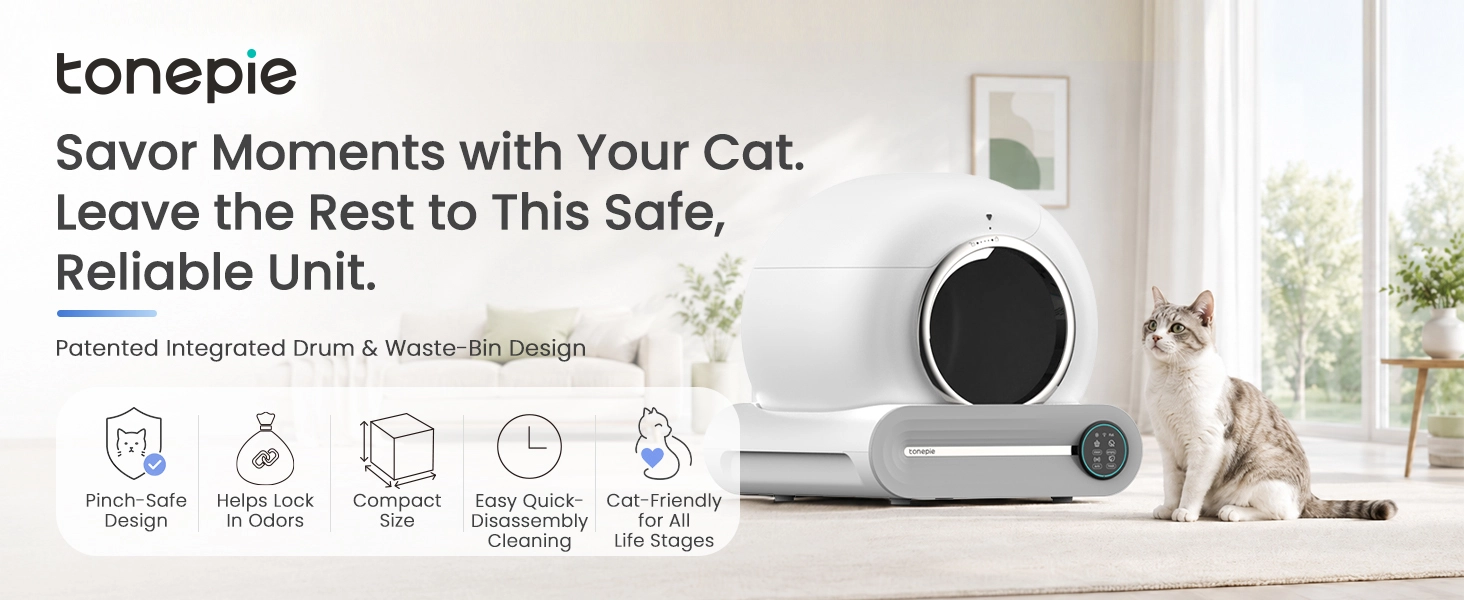
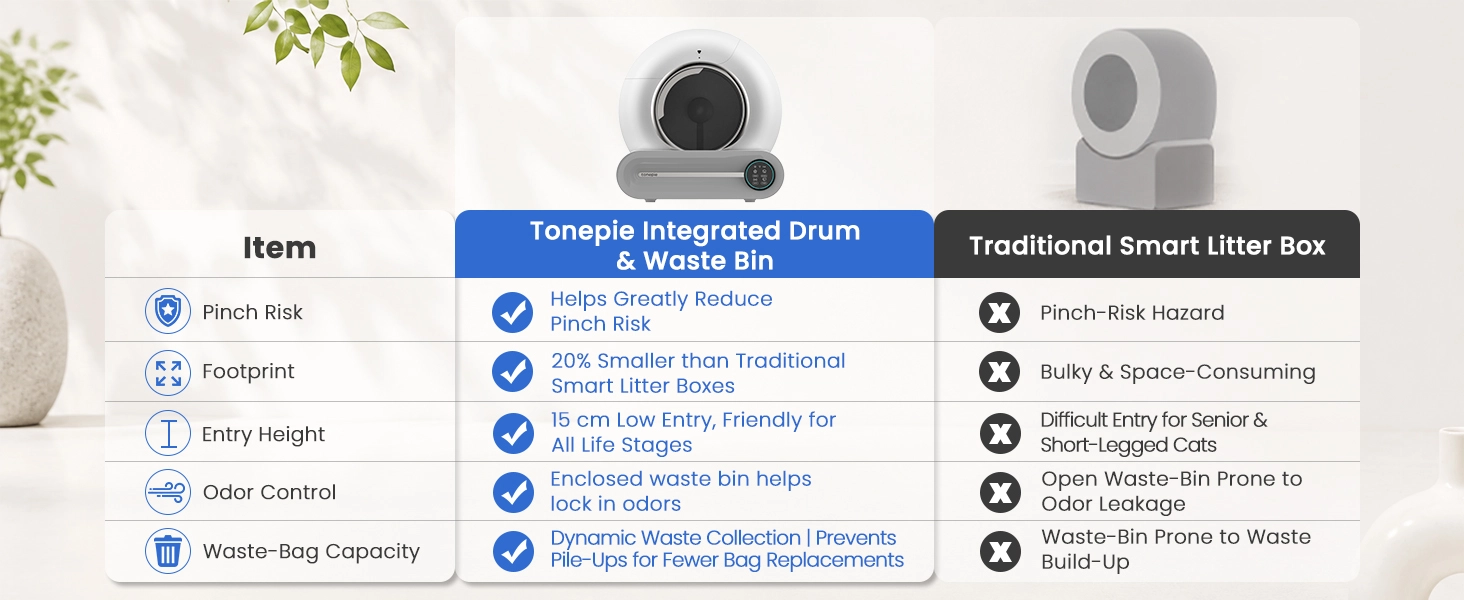
Tonepie Reinforced Base and Locking Power Port Smart Cat Litter Box
Conclusion
Designing pet technology for active cats requires respecting how felines actually move, dig, leap, and play. Lightweight shells and loose friction-fit plugs simply cannot keep pace with energetic animals. By anchoring the unit with a low-center-of-gravity, reinforced base and protecting its electrical lifeline with a recessed locking power port, modern engineering turns a common household pain point into a dependable, low-maintenance routine.
Whether you share your home with a fearless twenty-pound jumper or a duo of mischievous kittens, investing in structural stability and uninterrupted power ensures cleaner floors, fewer technical disruptions, and a calmer, more comfortable experience for your cats.
FAQ
1. Can a reinforced-base litter box be placed on carpet, or does it require a hard floor?
While a reinforced base is significantly more stable than a standard tray, automated litter boxes should still be placed on a flat, hard surface like tile, wood, or laminate. Soft carpeting compresses under the anti-slip pads, which can cause slight rocking and throw off precision weight sensors. If you must place the unit in a carpeted room, simply set it on top of a sturdy, flat base mat or thin wooden board to restore full stability and sensor accuracy.
2. What happens if my cat trips over or pulls hard on the locking power cord?
The locking power port is engineered specifically to resist accidental tugs, paw bats, and minor snags without disconnecting. Because the cord is secured inside a recessed underside channel and anchored by a mechanical latch or twist-lock collar, typical feline activity will not interrupt power. For safety, always route excess slack neatly against the baseboard so neither pets nor people can catch a foot on the cable.
3. Does the reinforced base make the litter box too heavy to move for deep cleaning?
Not at all. Modern reinforced bases achieve tip-proof stability primarily through smart geometry—such as a wider footprint, internal structural ribbing, and high-friction silicone feet—rather than excessive dead weight. Most units remain light enough for one adult to lift or slide comfortably once the globe is emptied, giving you rock-solid stability during daily use without sacrificing convenience during monthly deep cleans.